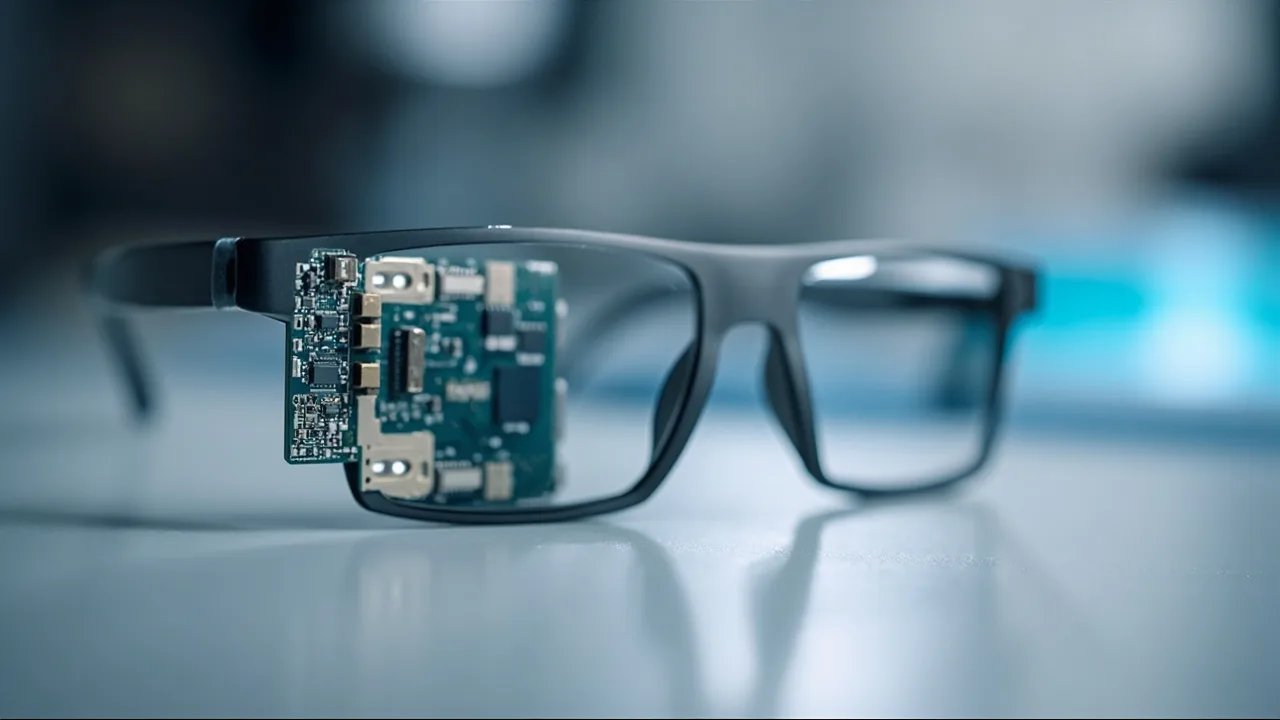
VeriSilicon (688521.SH) announced on November 18, 2026 a low-power, high-performance wearable subsystem solution for next-generation AI and augmented reality (AR) glasses. According to the company's press release, the solution pairs a new Nano-XR series built for glasses with its low-power processor IP portfolio and subsystem-level architecture optimization, spanning image and video processing, AI computing, voice and audio processing, display processing and graphics rendering.
The Nano-XR series includes four IPs: ISP NanoUltra-XR targets smartphone-class photo and video quality while optimizing power and die area; ISP Pico-XR addresses infrared (IR) sensor uses such as eye-tracking and gesture recognition for always-on functions; DC NanoUltra-XR delivers low-latency display processing for 3DoF/6DoF applications, using power gating and supporting multiple high-speed display interfaces; and GC NanoOptimaV-XR enhances GC NanoUltraV, already widely used in wearables, to improve warp and graphics performance while cutting memory usage.
At subsystem level, VeriSilicon says its DECNano compression technology provides visually lossless compression, reducing external PSRAM and DDR capacity and bandwidth needs, while FLEXA interface technology enables segment-level data exchange among processor IPs and uses on-chip SRAM to buffer intermediate data, reducing external memory access and end-to-end latency.
Dai Weijin, chief strategy officer, executive vice president and general manager of the IP division, said smart glasses are moving rapidly toward more complex applications and require both high energy-efficiency IP and seamless subsystem integration. The company said it is working with customers on dedicated smart-glasses chip designs based on the Nano-XR series.
Company background: VeriSilicon was founded in 2001, is headquartered in Shanghai, operates 9 design and R&D centers and 10 sales and customer support offices, and employs more than 2,000 people, with six processor IP lines plus over 1,700 analog and mixed-signal IPs.
Source: VeriSilicon press release, "VeriSilicon Launches a Low-Power, High-Performance Wearable Subsystem Solution for Next-Generation AI/AR Glasses," November 18, 2026.
Sources: 芯原推出面向新一代AI/AR眼镜的低功耗、高性能可穿戴子系统解决方案