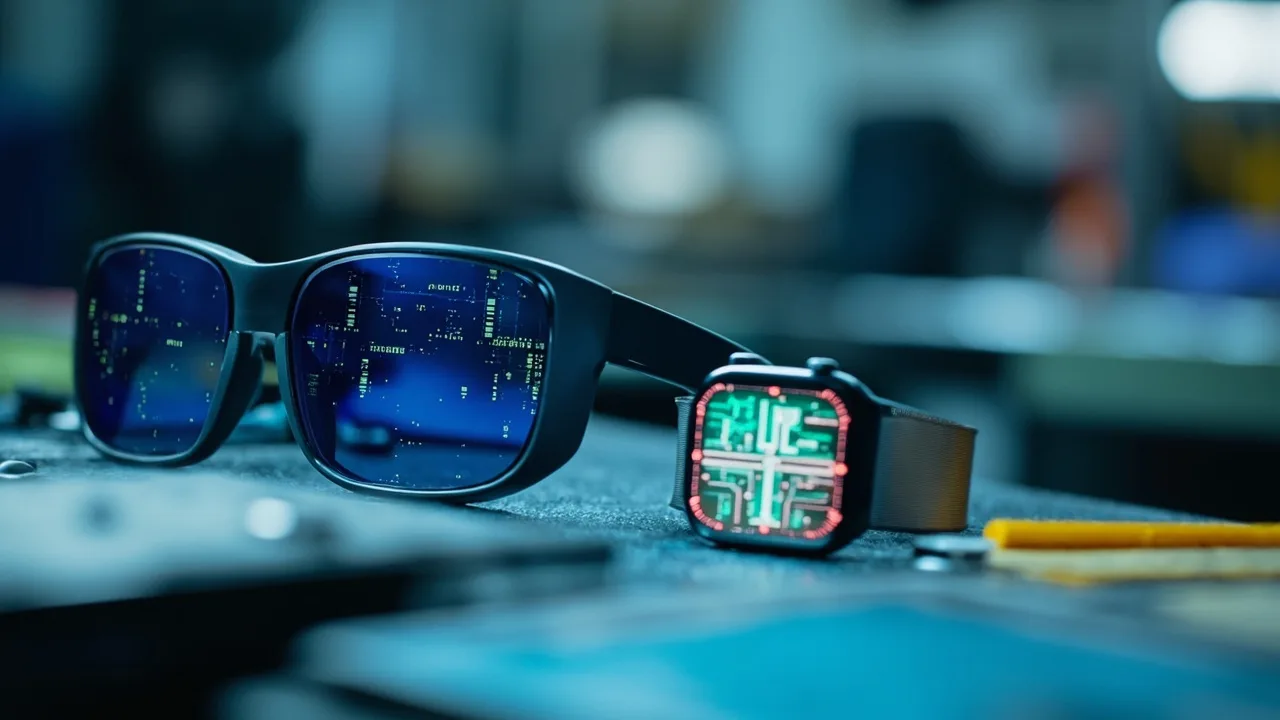
VeriSilicon (VeriSilicon Microelectronics (Shanghai) Co., Ltd., stock code 688521.SH) announced on October 29, 2026 the launch of GLTiny, a 3D graphics processing (GPU) programming model designed for wearables with constrained power and memory resources. According to the company, GLTiny runs on the Nano OpenGL ES GPU IP series and supports developers targeting smartwatches, smart glasses and other resource-limited wearable devices.
VeriSilicon said GLTiny offers a streamlined application programming interface (API) with an ultra-lightweight driver, plus configurable rendering functions that efficiently use the underlying OpenGL ES GPU capability. The company stated that this streamlined design significantly reduces driver memory footprint and CPU processing overhead, improving energy efficiency and performance (company claim; no third-party benchmark disclosed). GLTiny provides native rendering support for standard glTF™ 3D models, covering lighting models, skinning and morph targets, with full glTF animation support plus control over playback, animation clip switching and playback speed, and it supports visual effects such as Gaussian blur and water ripple. GLTiny can also be combined with VeriSilicon's VGLite vector graphics driver as a hybrid driver, enabling 2.5D vector graphics and 3D models to render together within the same frame.
Dai Wei (戴伟进), Chief Strategy Officer, Executive Vice President and General Manager of the IP business division at VeriSilicon, said power consumption and memory footprint are critical considerations in wearable device design and that the company developed GLTiny to address these challenges, aiming for seamless integration with existing wearable graphics content development ecosystems. He said, citing the company's own experience, VeriSilicon's VGLite 2.5D GPU programming model has become widely recognized as a de facto standard in the lightweight 2.5D graphics field (a company claim; no independent third-party corroboration disclosed).
Company materials state that VeriSilicon was founded in 2001, is headquartered in Shanghai, China, operates 9 design and R&D centers globally and 10 sales and customer support offices, and employs more than 2,000 people. The company also holds six processor IP lines (GPU, NPU, VPU, DSP, ISP and display processing) and more than 1,700 analog and mixed-signal IPs.